2D Cutting Lab
1.1 Problem Summary
1.2. Creating New Problem
1.3. Define Machining Process data
1.4. Loading Cutting tool Coating material
1.5. Defining Cutting Edge geometry
1.6. Coating Definition
1.7. Assign Tool material
1.8. Generating Tool mesh
1.9. Tool Boundary conditions
1.10. Set the Workpiece geometry data
1.11. Assigning Workpiece material
1.12. Generating Mesh for Workpiece
1.13. Workpiece Boundary condition page
1.14. Tool Positioning
1.15. Tool wear setting
1.16. Contact page
1.17. Step control page
1.18. Generate Database
1.19. Running Simulation
1.20. Post Processing
Problem Summary
This lab will briefly demonstrate how to use the machining template to prepare model data representing orthogonal cutting conditions (cutting edge is orthogonal/perpendicular to the cutting direction) to simulate chip formation process. Interactive definition of the process conditions, cutting edge, coating, material, steady state and tool stress related features are discussed here. Brief description of the orthogonal cutting conditions and how the process parameters are related to the modeling domain are indicated as shown in the Fig. 2DCL1.1.
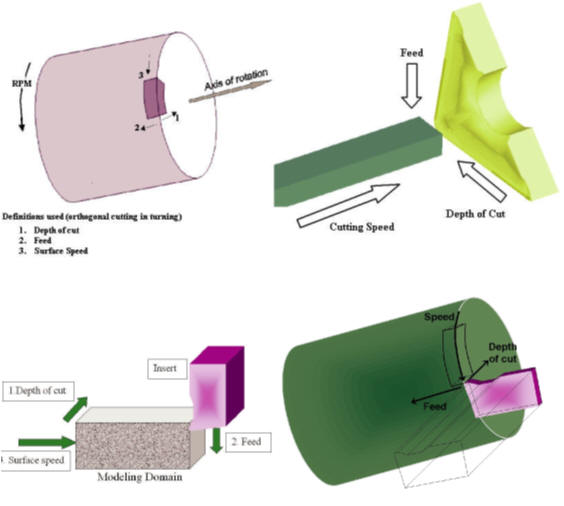
Relationship between the process data and analysis domain
Creating New Problem
We can open 2D Cutting wizard in two ways:
a. Create a new problem either by selecting File **New**Problem or by clicking the New Problem
  icon. The Problem Setup window will appear. Select “ Integrated Manufacturing Process “ radio button and Unit system as “SI “ using radio button. Define Problem Name as “2D_CUTTING “ and click on
  button to open a new Problem using the Integrated Manufacturing Process. Multiple Operation wizard will open, at this point user will be prompted to specify a project name (system will create a separate folder with this project name) and title for this session. In this session we will use “2D_CUTTING “ as the project name. Click on to continue to open the operation. Integrated Manufacturing Process will open, add 2D Cutting operation from the Explorer Operations list. Add the operation by clicking on
  button available next to 2D Cutting or by drag and drop into the Operation editor.
b. Create a new problem either by selecting File **New**Problem or by clicking the New Problem icon. The Problem Setup window will appear. Select “2D Cutting” radio button and Unit system as “SI “ using radio button as shown in Fig. 2DCL1.2.. Define Problem Name as “ 2D_CUTTING “ and click on button to open a new Problem with 2D Cutting operation in MO wizard.
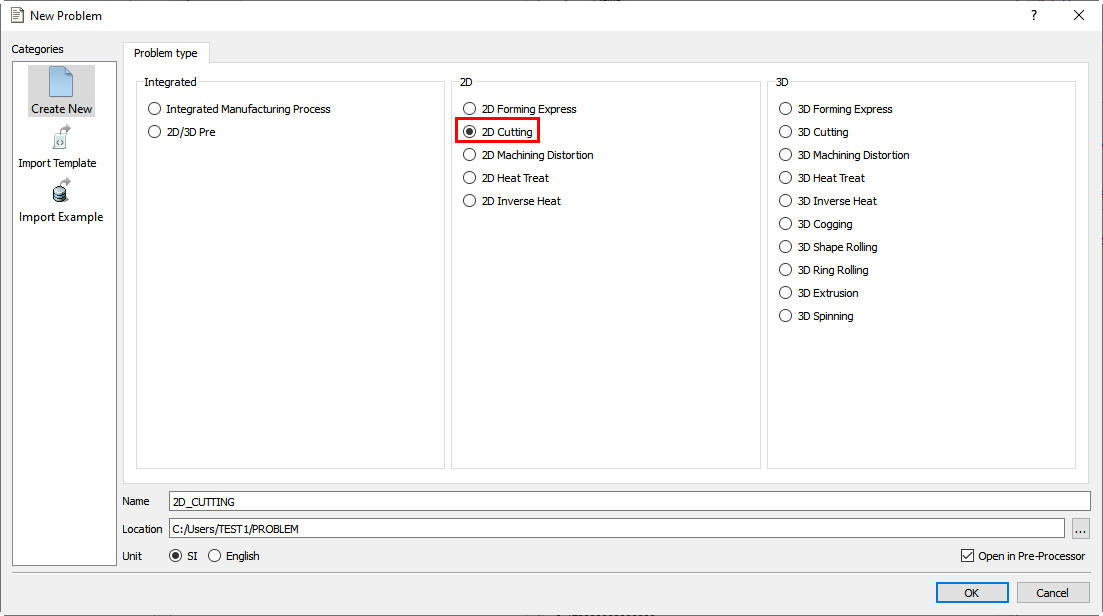
Problem Setup Page
Define Machining Process data
Under the ‘Process ’ menu, Select Simulationtype as ‘TransientAnalysis ‘, enter the Environment Heat Transfer temperature as 22.5 °C and use default Convection coefficient 0.02 N/sec/mm/C. Select the ‘surfacespeed as 250m/min and feedrate as 0.15 mm/rev ’ (see Fig. 2DCL1.3.). Alternatively user can also specify rotational speed of the workpiece and part diameter instead of surface speed. Then click on .
.
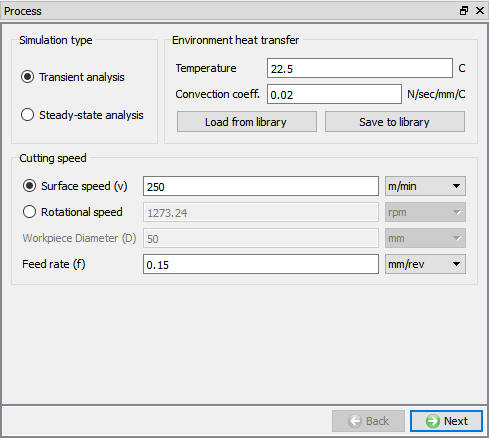
Process page
Loading Cutting tool Coating material
Load ‘Coating-TiN ‘ and ‘Coating-Al2O3 ‘ Material from Tool_Material category using  buton for assigning to Tool coating. Then click on until Tool page.
Defining Cutting Edge geometry
In ‘Tool ’ page, enter the tool temperature as 20 °C. We can import the cutting edge geometry from a previously defined simulation keyword file or a database file using  option. For this lab we will define the cutting edge geometry using the primitives available with the system. Click on to enter the ‘Insert Geometry ’ menu (see Fig. 2DCL1.4.) and click on
  . Select # 3 geometry in Primitive page and click on
  to Create geometry. Then click on
  to come out of the ‘Geometry Primitive’ menu and click on to proceed.
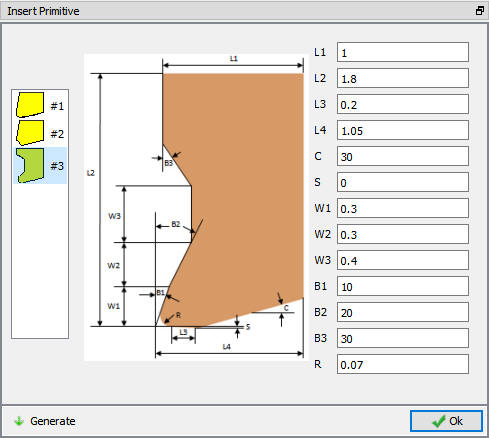
Define Primitive Window
Coating Definition
Assign ‘CoatingMaterial ’ and thickness in Coating material table, add ( ) two layers of coating. For the outer layer select 10microns as coating thickness and ‘TiN ’ as the material and for the innerlayer select 10 microns as the coating thickness and ‘Al2O3 ’ as the coating layer (see Fig. 2DCL1.5.). Click on to proceed.
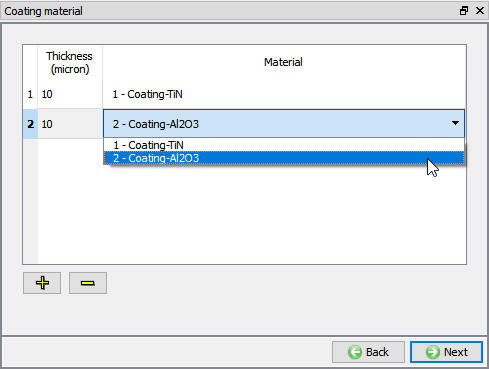
Coating layer and Material Definition
Assign Tool material
In Material Window, click on to Load material data from Library and load ‘WC ‘ material from ‘Tool_Material ‘ category by clicking  button as shown in Fig. 2DCL1.6. Click on to generate Mesh for the Tool.
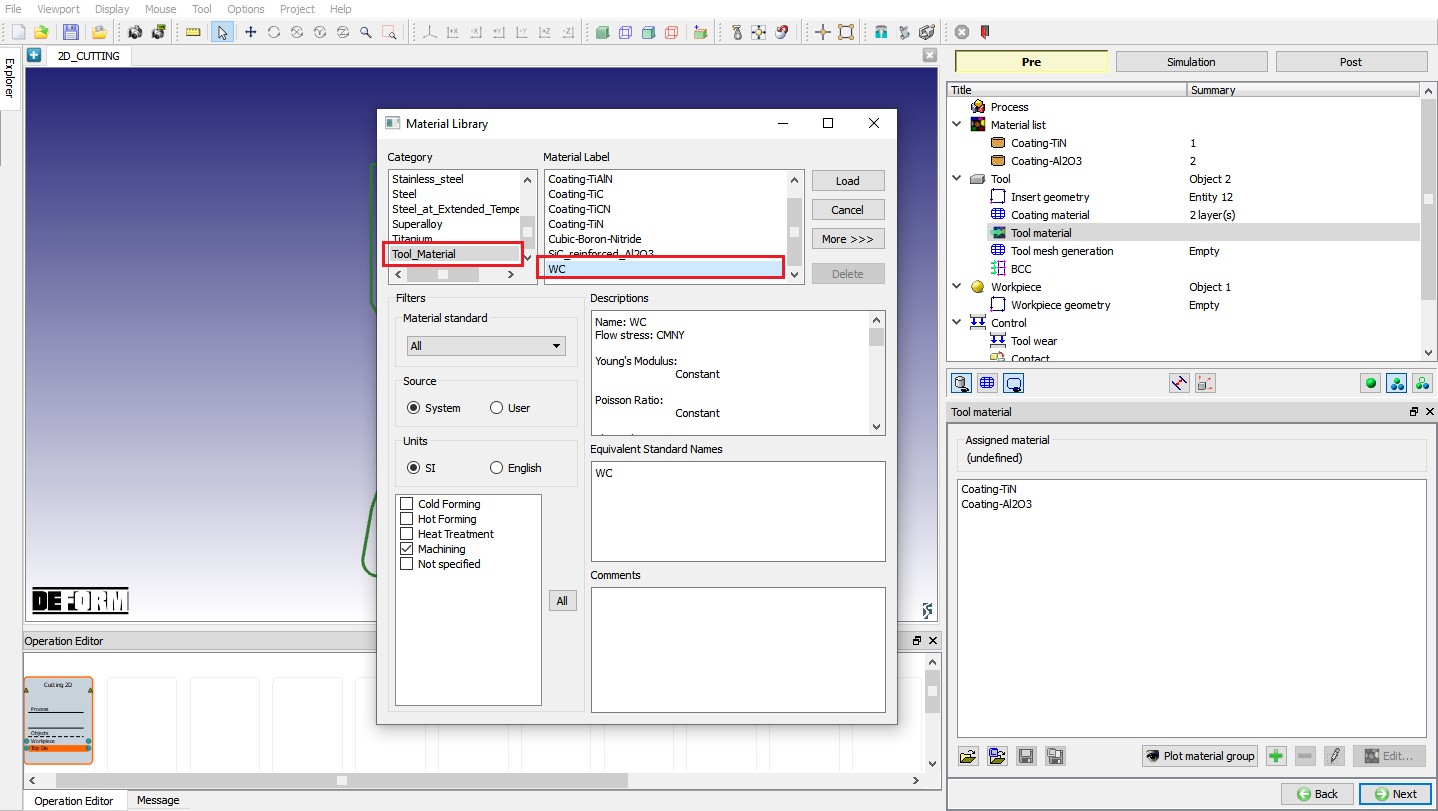
Loading Tool material from Material Library
Generating Tool mesh
In the Tool mesh generation menu select ‘700 ’ as the target number of elements for the insert and click on  (see Fig. 2DCL1.7.). Click on to proceed.
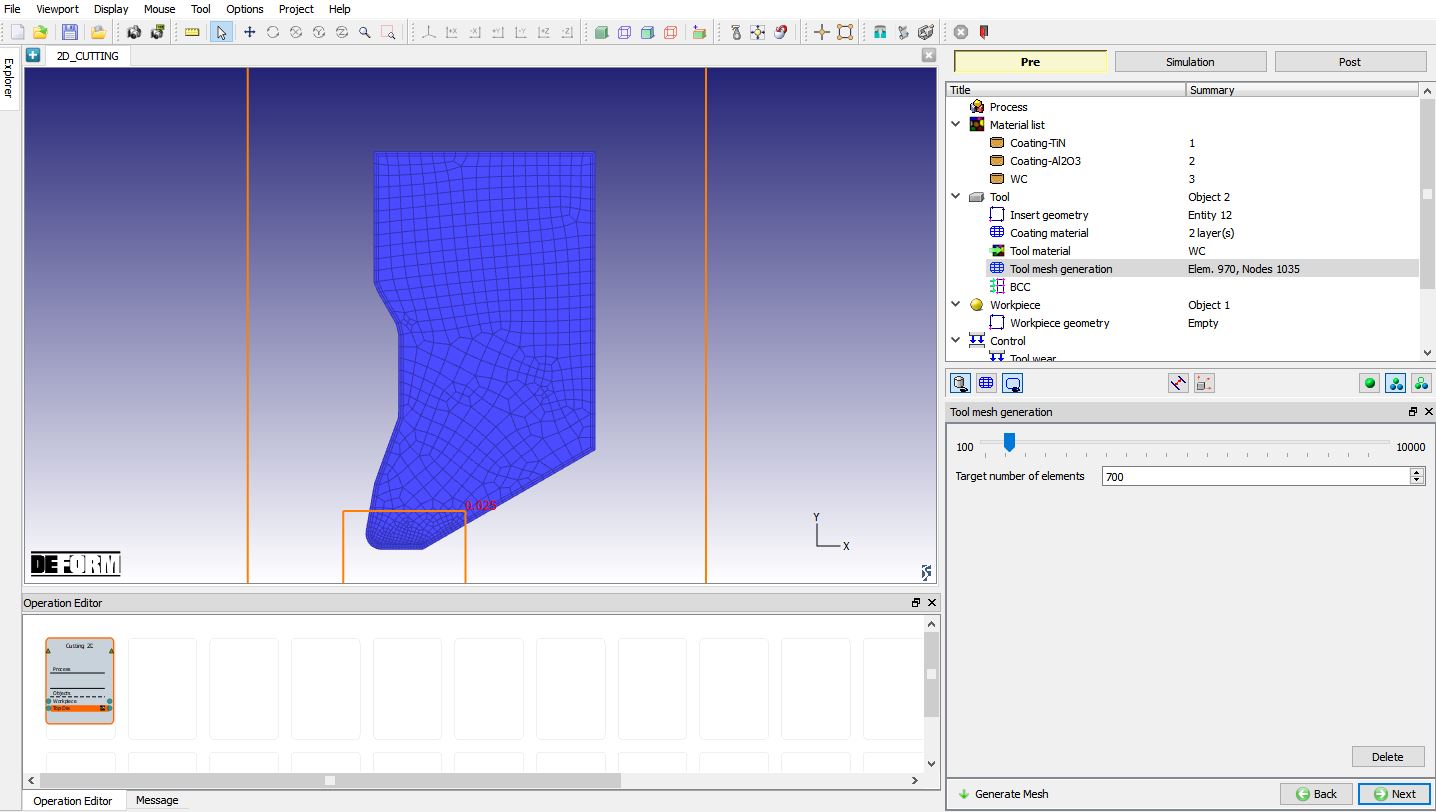
Tool Mesh Page
Tool Boundary conditions
Next step is to view the thermal boundary conditions generated by the system in the BCC menu. The program generates heat exchange with environment (part of which comes from insert contact region) and the fixed nodal temperature BCC for the surfaces away from the cutting edge (see Fig. 2DCL1.8.). Click on to proceed to the workpiece setup.
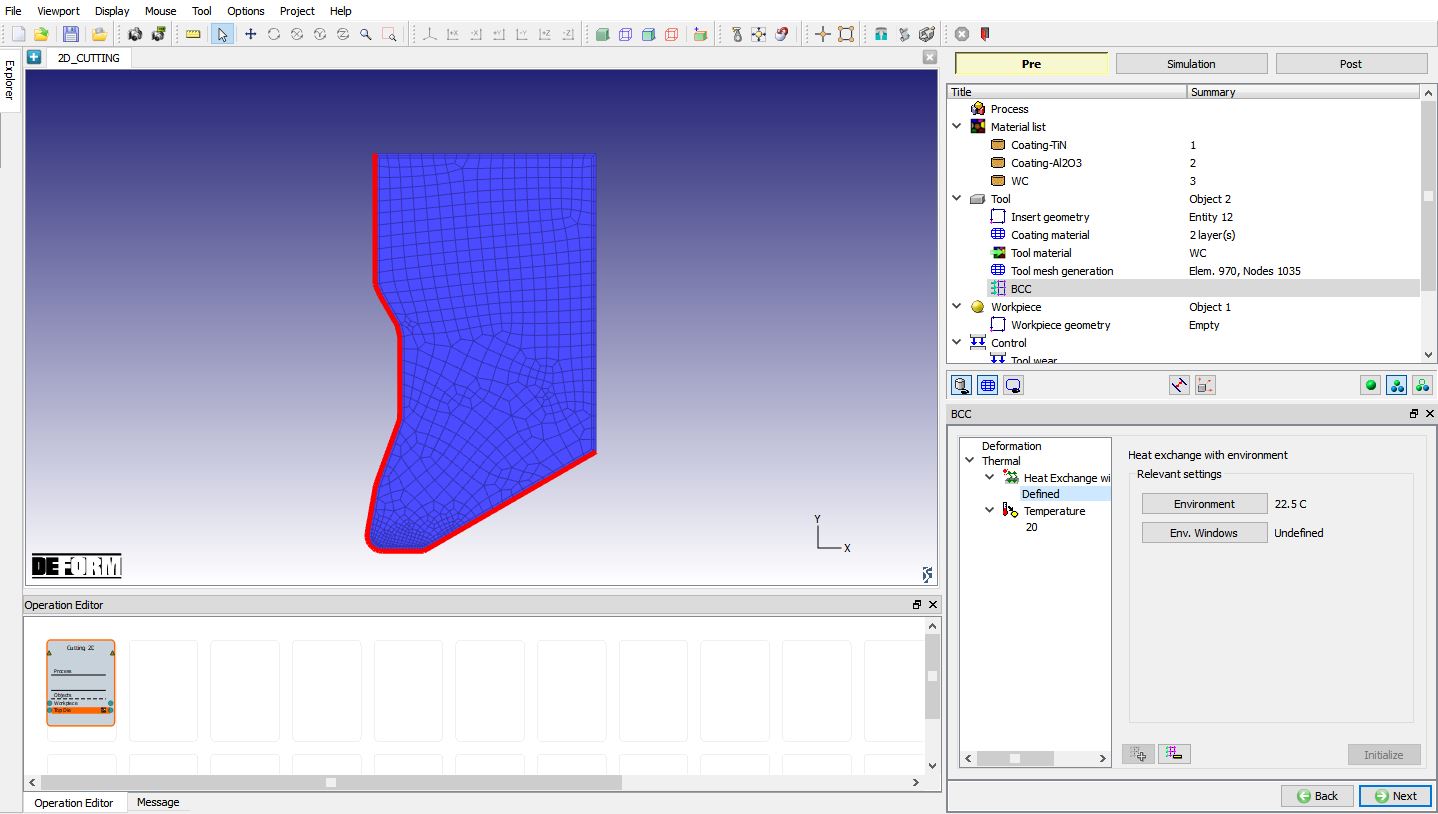
Tool Boundary Condition
Set the Workpiece geometry data
In the ‘Workpiece setup’ define workpiece as a plasticobject and temperature as 22.5 °C and click on to proceed.
Click on label in the ‘Workpiece Geometry’ page. Using the parameters L = 3 and H = 1 , click on to create the workpiece geometry (see Fig. 2DCL1.9.). Click to close this geometry menu and click on to go to Material page.
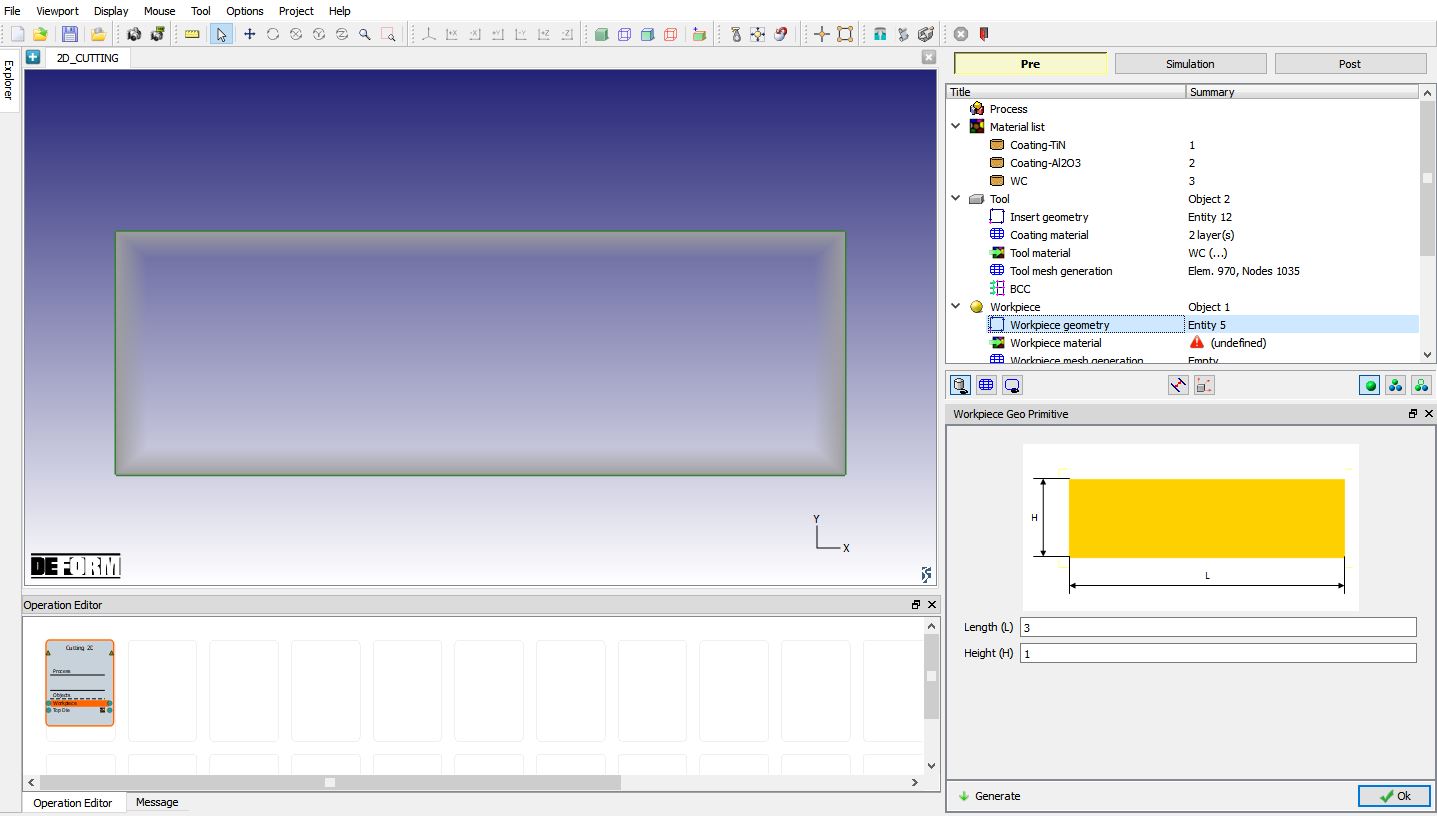
Defining Workpiece geometry
Assigning Workpiece material
In ‘Workpiecematerial ’ page, choose the option ‘import material from library’ option, select ‘Steel ’ category and ‘AISI-1045 (machining) ’ (see Fig. 2DCL1.10.). ‘Load’ this material and click on to generate Mesh.
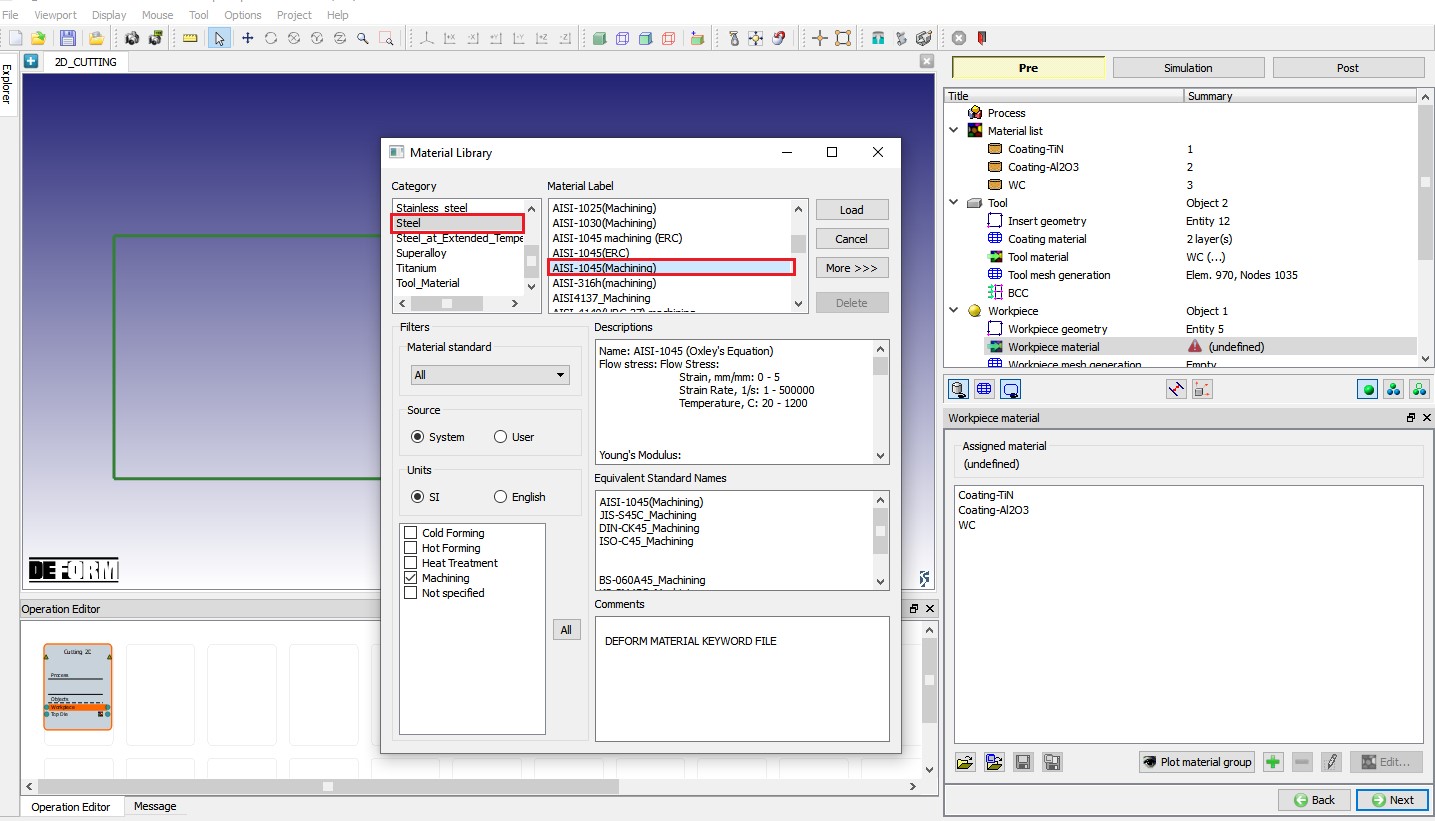
Loading Workpiece material form Library
Generating Mesh for Workpiece
Select 15 as No. of elements through uncut chip thickness for the workpiece and click on to complete mesh generation for the workpiece (see Fig. 2DCL1.11.). Click on to BCC page.
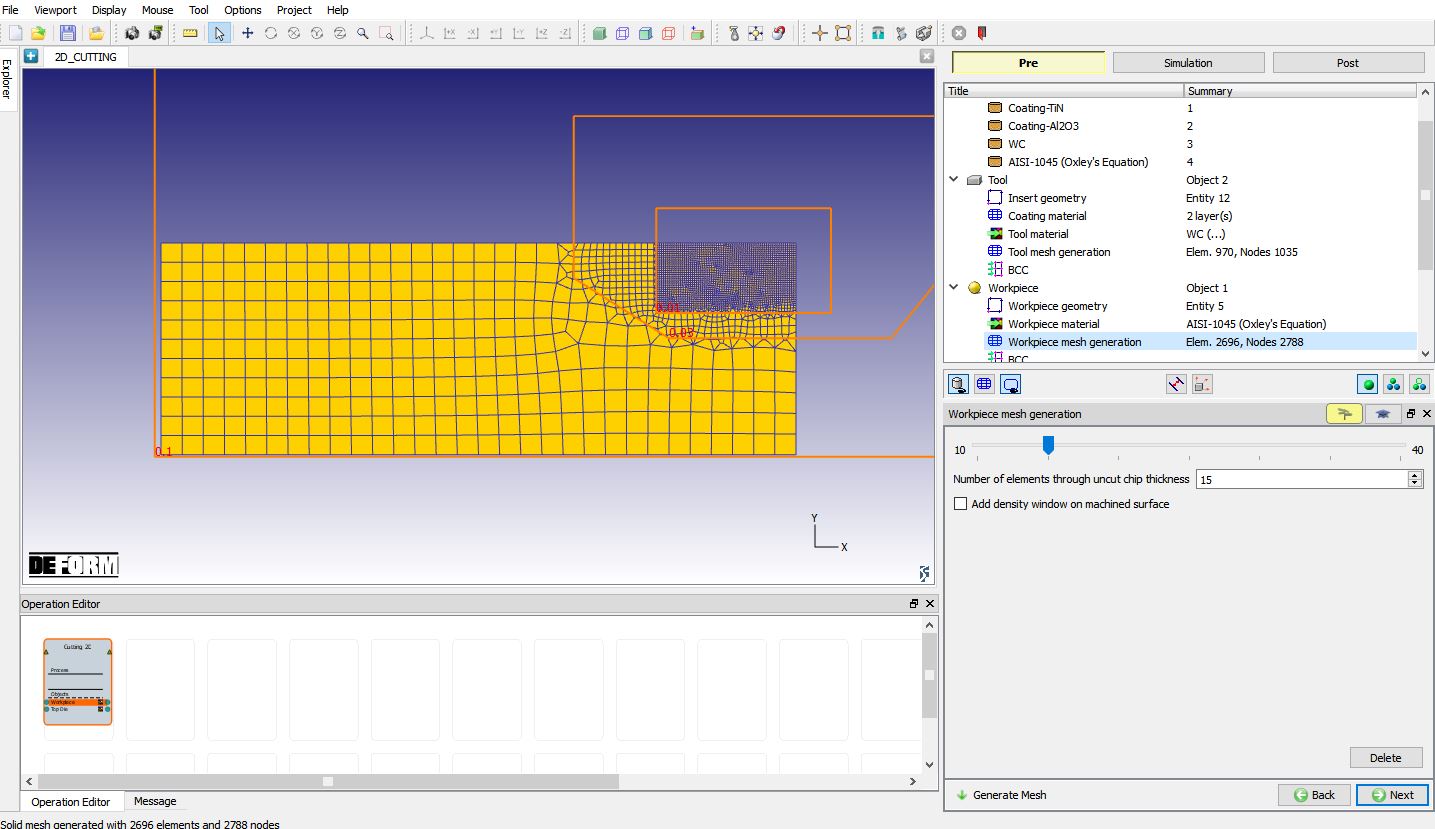
Workpiece mesh page
Workpiece Boundary condition page
In the ‘View Workpiece BCC’ menu, check the boundary conditions imposed on workpiece by the system (see Fig. 2DCL1.12.), and click on to Controls page. Note the velocity BCC assigned to the bottom edge away from the cutting surface to prevent workpiece from flying. Heat Exchange with BCC is assigned to all surfaces except bottom edge and to bottom edge temperature BCC is assigned. From V13.0.1, instead of Surface Velocity (Vx) BCC, Movement BCC will be defined to bottom edge of the Workpiece (See Fig. 2DCL1.12.) and movement will be defined in Movement page of the Workpiece. Heat Exchange with BCC is assigned to Top edge and -X (left side) edge. Temperature BCC is assigned to bottom edge and +X (right side) edge. Click on .
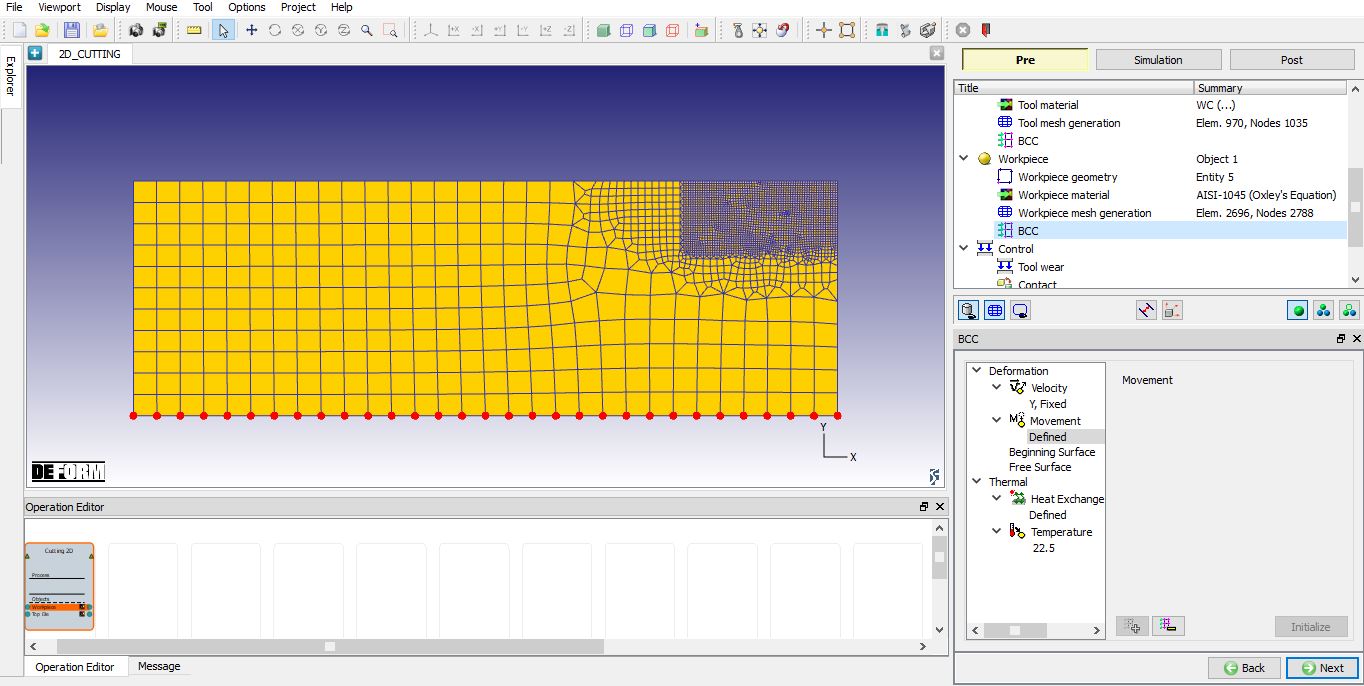
Boundary Condition for workpiece
Tool Positioning
In the ‘Position’ menu, click on  position’ (see Fig. 2DCL1.13.). Automatic position will position the objects automatically in simple setup with one cutting tool and workpiece and click on .
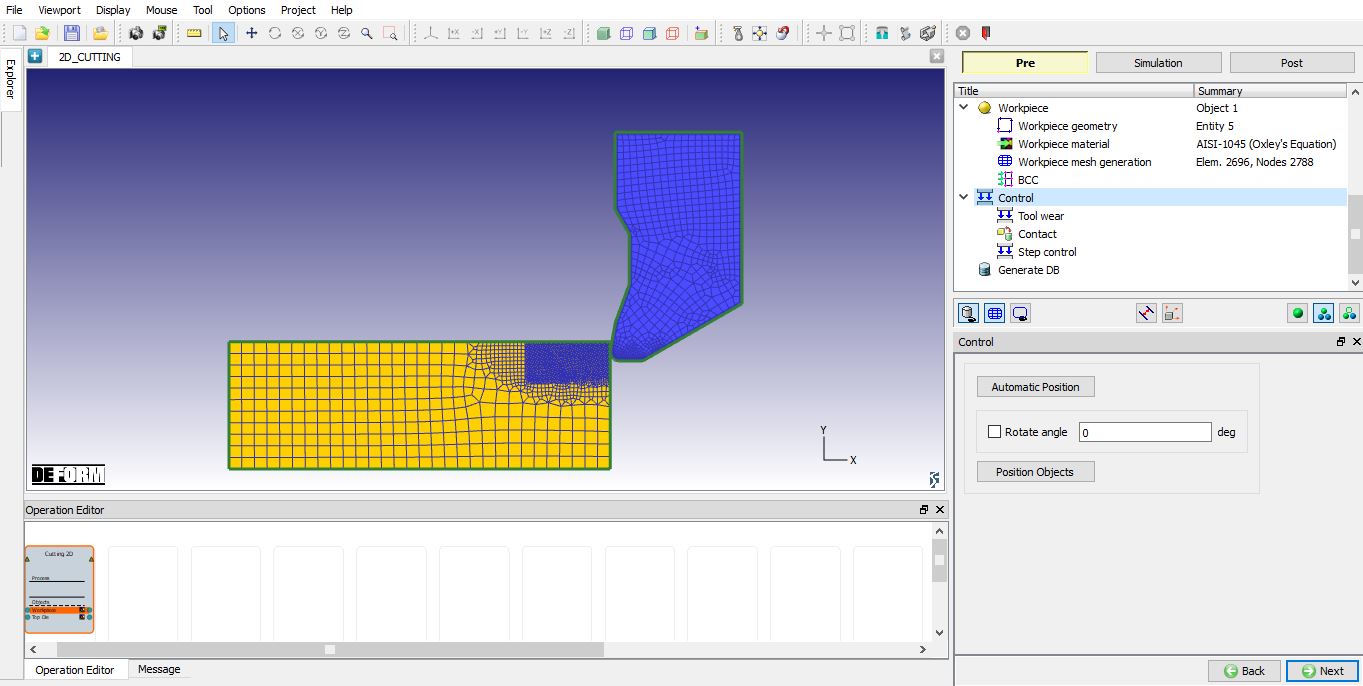
Objects after positioning
Tool wear setting
Select Usui’s model and input coefficients a, b, please note that these (shown next to the equation) are only some typical values that can be obtained from the literature, and user is responsible for accuracy of this data (see Fig. 2DCL1.14.). If user is interested in Tool wear calculation then Turn on “Update worn geometry” check box. Click on to contact page.
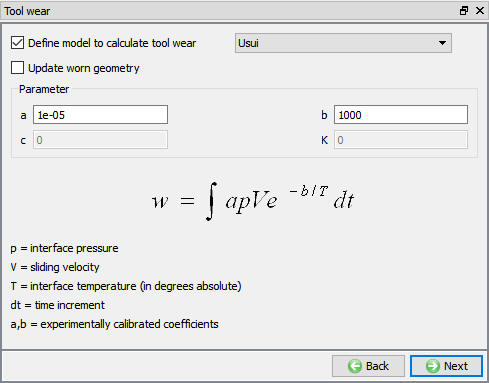
Tool wear setup window
Contact page
In Contact page, use default relations. Click on Tool - Workpiece relation  (Edit button) and define shearfriction factor as 0.48 and the interface heat transfer coefficient as 39.5N/sec/mm/C as shown in Fig. 2DCL1.15., click on
  to generate contact. Click on to Step control page.
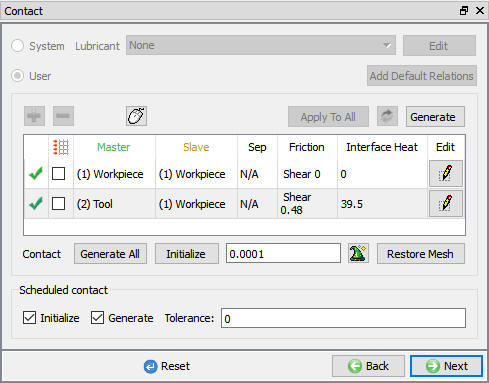
Contact page
Step control page
Check the ‘Simulation controls’ and set the lengthofcut as ‘1 mm ’ and leave the rest as default values as shown in Fig. 2DMDL1.16. and proceed to generate the Database.
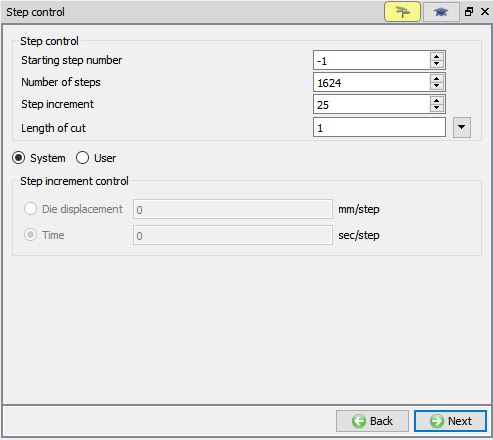
Step Control page
Generate Database
In Generate DB page. Click on the  button to generate the database. Observe the message in Message tab informing database generation status.
Running Simulation
Once the database has been generated switch to the Simulation mode by clicking on  button above the operation tree. Click on the
  action label to open the Run Options dialog as shown in Fig. 2DCL1.17. Use the default ContinueRun option to select “Continue from the last step ” (from step -1) option and then select the Simulation mode as Interactive radio button. Click on
  button to run the simulation.
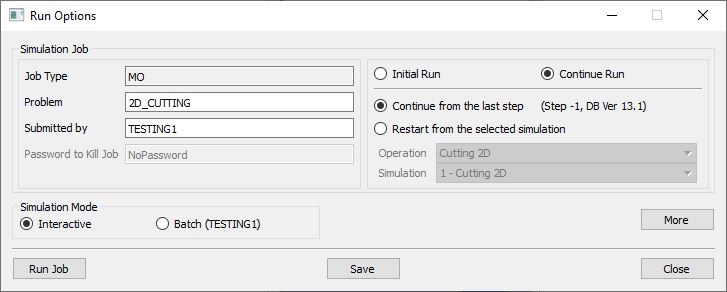
Run Simulation Window
Monitor the progress of the simulation by looking at the Simulation Message and Simulation Log tab, making sure that the  option is checked. User can view the cutting process as the simulation proceeds to the specified cutting length from Simulation graphics.
When the simulation is finished we can observe that the following message is added to the end of the Message file:
“PROGRAM STOPPED!
THE CURRENT TIME 0.0002400
THE CURRENT LOCAL TIME 0.0002400 HAS REACHED THE SPECIFIED LIMIT 0.0002400”
Post Processing
When the simulation is completed, review the results by switching to Post mode using the  button above the Simulation tool bar.
Play through the steps of the simulation and look how the chip has been formed during cutting process. (see Fig. 2DCL1.18.)
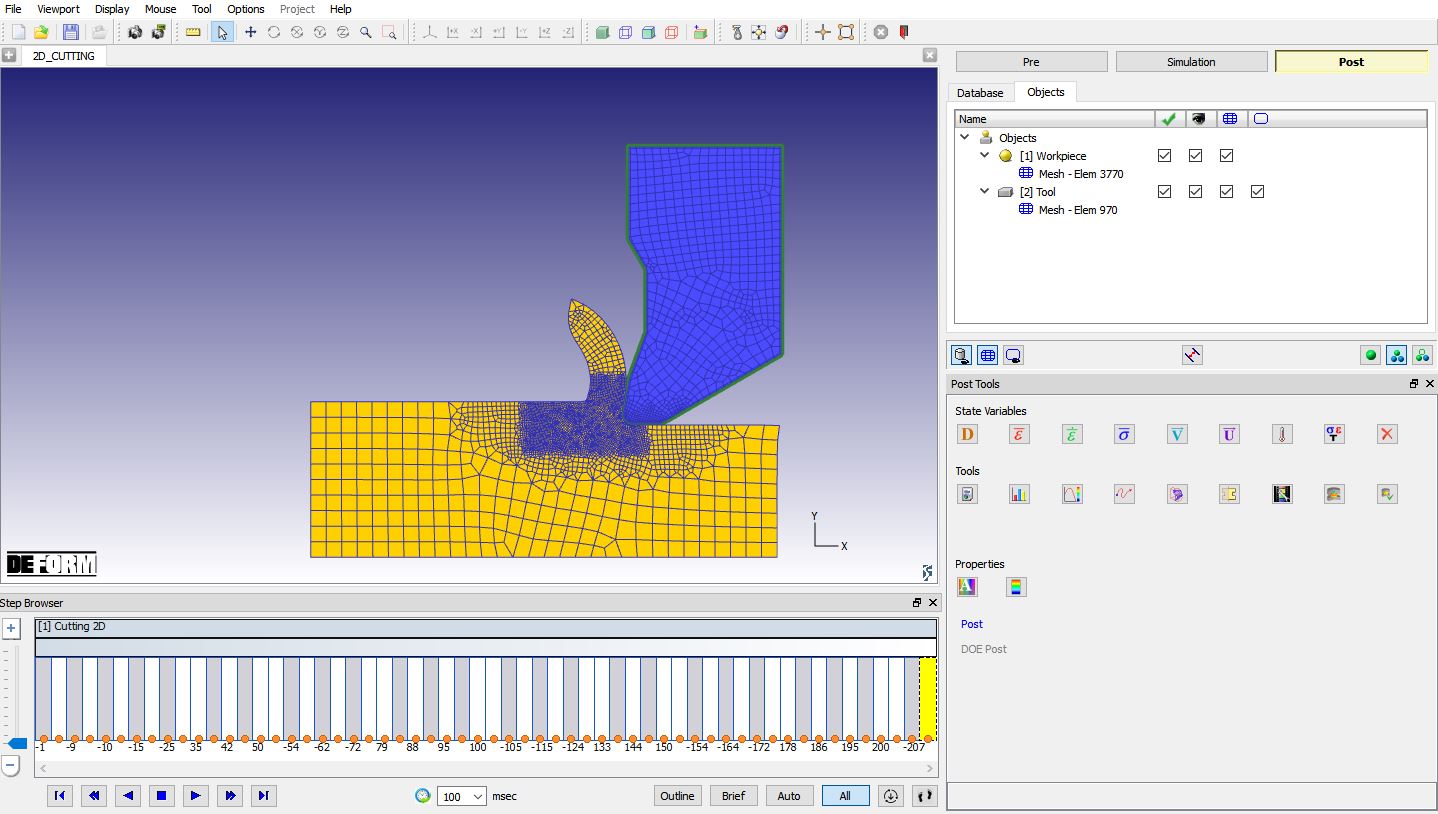
MO Post mode
Plot the EffectiveStress for the workpiece object and observe the plot as shown in below Fig. 2DCL1.19.
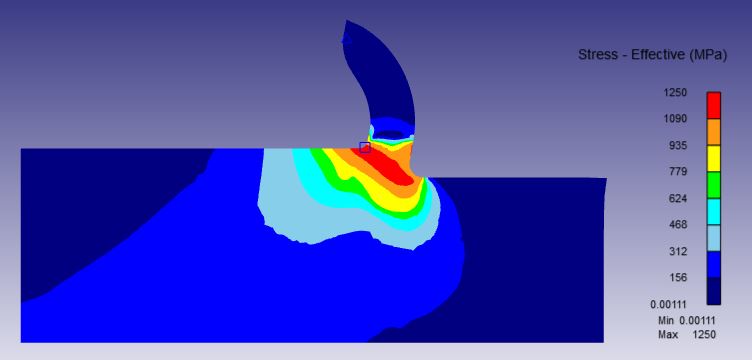
Effective stress plot for workpiece object at last step
Plot the Effective Strain for the workpiece object and observe the plot as shown in below Fig. 2DCL1.20.
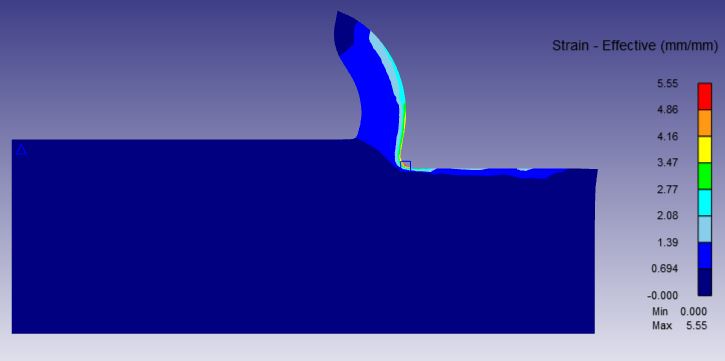
Effective strain plot for workpiece object at last step